
Miller County Release Records
A Miller County Jail release record answers when and why a person left that jail. It does not, by itself, prove the person is free from every form of custody. The Miller County Sheriff's Office operates the jail and holds its booking and release records. A person may leave after bond, recognizance, time served, a completed misdemeanor term, dismissal, or another court order. The jail may also transfer a person to the Georgia Department of Corrections, another county, federal custody, or immigration custody.
That distinction controls the search. A current roster, where one exists, tracks people still held. Miller County did not publish a verified Georgia jail roster or recent-release feed in the reviewed official sources. Once someone leaves local custody, the sheriff's release record and the related court record become the key local evidence. State or federal tools take over after a transfer.
Miller County Release Types
Release codes describe the event that ended the local jail hold. They also point to the next record source. Bond permits a person to leave while the case continues. Time served means the ordered jail term has been credited as complete. A transfer ends Miller County Jail custody but starts or continues custody under another agency.
| Release type | Meaning | Best next source |
|---|---|---|
| Bond or recognizance | The person leaves jail while the criminal case remains open. | Sheriff release record and Magistrate Court bond record |
| Time served | Credited jail time satisfies the local sentence. | Release record and sentencing docket |
| Court order or dismissal | A judge or case action authorizes release. | Clerk of Superior Court or Magistrate Court |
| Sentence complete | The confinement term ends. | Jail or GDC discharge record, based on custodian |
| Transfer | Local custody ends, but custody continues elsewhere. | GDC, BOP, ICE, another county, or the receiving agency |
| Parole | State prison custody changes to supervised community release. | State Board parole tools and DCS |
- Discharge
- The formal end of custody or a sentence under the controlling agency.
- Time served
- Jail credit that satisfies the term imposed.
- Detainer
- A request or authority that may keep a person held for another agency.
- Parole
- Conditional release from a state prison sentence under supervision.
Miller County Release Record Fields
A focused request should identify the person and the approximate booking period. The public record may connect the release to an arrest, warrant, bond, sentence, or transfer. Ask for enough detail to separate people with similar names and separate bookings for the same person.
| Field | What it shows |
|---|---|
| Name and aliases | The identity used in the jail system |
| Booking number | The unique local custody event |
| Booking date and time | When the jail accepted custody |
| Charge or hold basis | Why the person was detained |
| Release date and time | When Miller County Jail custody ended |
| Release reason or type | Bond, time served, court order, sentence completion, or transfer |
| Releasing authority | The jail, court, or outside agency authorizing the change |
| Transfer destination | Where custody continued, when public |
A booking photo is a separate item. Georgia law places special limits on law-enforcement release of booking photographs in pay-to-remove contexts. The text release record can still be requested without asking for a photograph.
Request Miller County Release Records
The county's Open Records Request Form cites the Georgia Open Records Act and says the open records officer has three days to gather requested information. Its most important local instruction is routing. Records of constitutional offices must go directly to that office. Jail release records therefore go to the Sheriff's Office, not just the general county return address.
- Give the full name, known booking date, and booking or case number if available.
- Ask for the public booking and release record, including date, time, reason, authority, and transfer status.
- Send the request directly to the Miller County Sheriff's Office at 300 W. Pine Street, Colquitt, GA 39837, or contact the office at (229) 758-3421.
- Ask for a cost estimate before work begins if the request may require extensive search, retrieval, redaction, or copies.
- If material is withheld, ask the custodian to cite the legal basis for the redaction or denial.
No Miller County release-record fee schedule was found. O.C.G.A. § 50-18-71 governs access, charges, and estimates, including notice when estimated costs exceed $25. The law uses a three-business-day production framework when responsive records exist and are available, but complex requests can require more time.
Miller County Record Access Laws
Georgia's Open Records Act begins at O.C.G.A. § 50-18-70. Access and timing rules appear in § 50-18-71. Section 50-18-72 includes exemptions, including limits for some pending investigation and prosecution records. Initial arrest and incident reports are treated differently from protected investigative material. Medical, security, juvenile, sealed, or otherwise exempt details may not be released.
Record restriction under O.C.G.A. § 35-3-37 can affect access to criminal-history information. Restriction is not a promise that every mention vanishes from every system. Court files, jail records, state history, and copied material follow their own legal authority and update process. The Georgia Courts record-restriction resources explain the applicable process.
Find Miller County Released Inmates
Start with the agency most likely to have held the person. Then follow any transfer. This prevents a false conclusion based on one empty search result.
- Call Miller County Jail and ask whether the person is currently held, released, or transferred.
- For bond or first appearance, check Miller County Magistrate Court. For felony disposition or sentence records, check the Clerk of Superior Court.
- If sentenced to state custody, use GDC Find an Offender and the State Board's parole and prison-release tools.
- Try Georgia VINE for a custody-status record or alert when the relevant agency participates.
- Use BOP for a federal case and ICE's locator for current immigration custody.
- Request the written release record when a verbal check or public tool does not resolve the status.
A 24-hour release check addresses same-day events when no local feed exists. A projected or tentative date is a different question because it concerns a possible future event, not proof that custody has ended.
Miller County Bond Release Checks
Miller County bond-out research belongs with the local court structure. The Magistrate Court conducts first appearances and bond hearings. It also handles extradition, committal, warrant applications, arrest and search warrants, and good behavior bonds. A person who leaves jail after first appearance may be confirmed more clearly through both the Magistrate Court record and the sheriff's release entry than through a recent-release list that does not exist.
Call the jail first for the custody event. Then contact Magistrate Court at 155 South First Street, Courthouse Room 110, Colquitt, GA 39837, or (229) 758-4110 for the bond proceeding. A bond release does not close the criminal case. The person may still have court dates and conditions shown in the case file.
Miller County Release Court Paths
Miller County's two court paths answer different release questions. Magistrate Court covers first appearance and bond. The Superior Court and Clerk maintain criminal cases and warrants and assist the public with court records. A superior or state court order, sentence, disposition, or commitment may explain why local custody ended.
The Clerk of Court is at 155 S. First Street, Room 103, Colquitt, GA 39837, and can be reached at (229) 758-4102 during posted weekday office hours. The clerk also collects probation fines. That is a court payment and record contact point, distinct from money held on a jail account or a GDC release card.
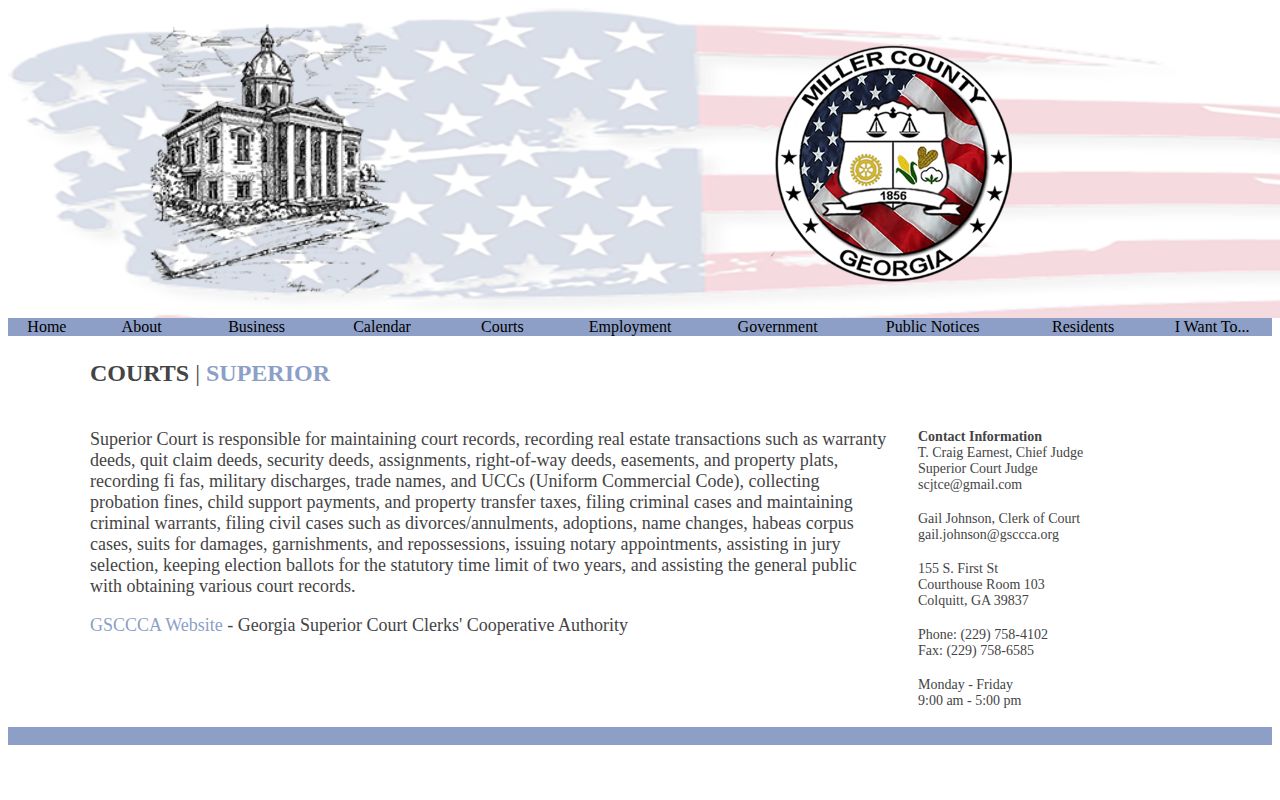
The official court page shows why a lasting court record may remain useful after the jail's active custody entry is gone.
GDC Miller County Release Search
A felony sentence can move the search out of the county system. GDC describes a sentencing phase in which a person may wait in a local jail before transfer to a diagnostic facility. After intake and classification, use the GDC Find an Offender search. It accepts personal information and identifiers such as a GDC ID or case number. Results may show identifying data, custody or facility information, sentence details, and a photograph when available.
The search is a starting point. GDC warns that it does not guarantee completeness and directs verification to Inmate Records and Information, P.O. Box 1529, Forsyth, GA 31029. State date terms can include Maximum Release Date and Tentative Parole Month. A tentative month is not a final release date.
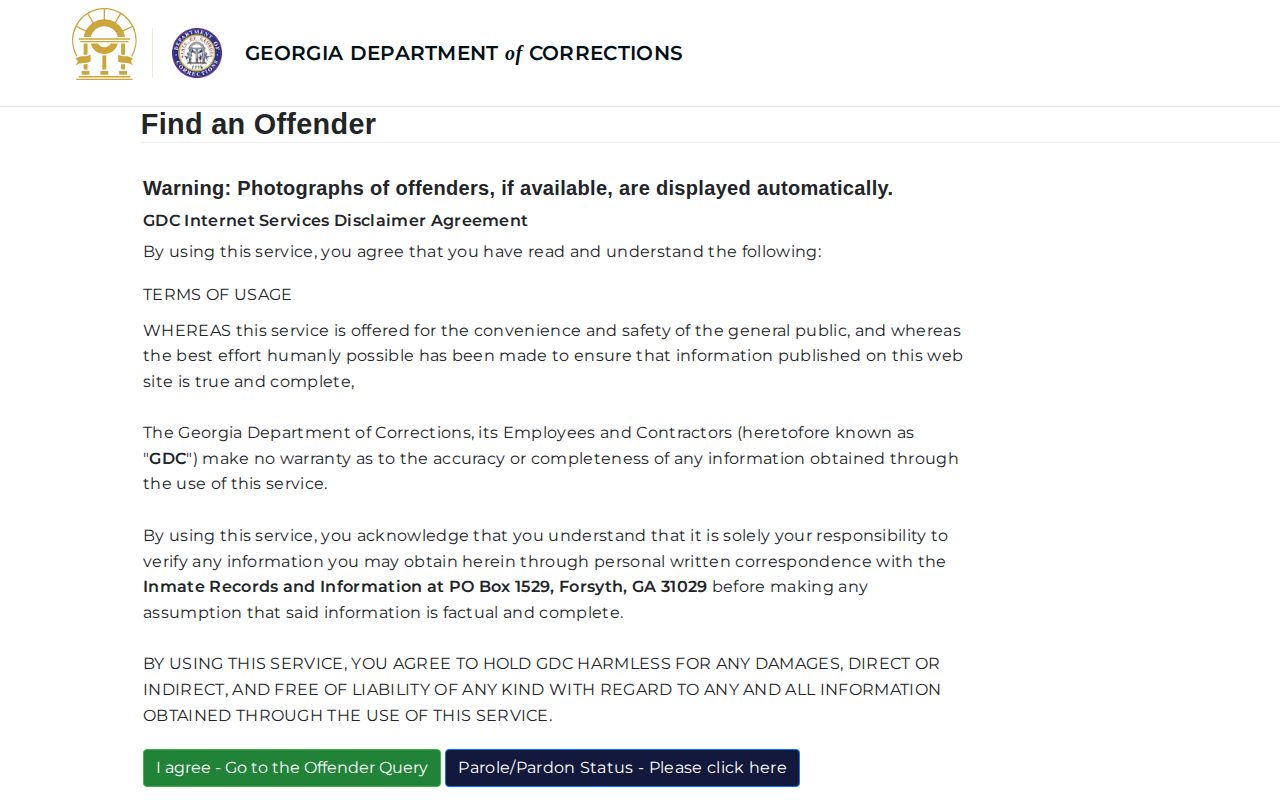
The official GDC screen is appropriate for state custody, not a routine county-jail bond release.
Georgia Release Card After Prison
Georgia has a specific money process for people released from state prison. The GDC Georgia Release Card page says remaining funds on a released person's books are transferred to a card. It gives instructions for activation, PIN setup, ATM access, and cash-back use, plus a JPay questions number.
This is not a stated Miller County Jail property policy. No official local jail property-release procedure was found. Questions about belongings or local account funds should go directly to the jail. State-prison funds follow the GDC card process.
Miller County Release Court Payments
The Miller County Superior Court page says the clerk collects probation fines. That local detail separates three types of money that can arise after custody. A probation fine is paid or documented through the court process. Funds left in a state prison account follow the GDC release-card process. Any property or account question from Miller County Jail must go to the sheriff because no official local release-property policy was found.
A person checking an obligation should identify the source before making contact. The Clerk of Superior Court can address the court record and payment entry at 155 S. First Street, Room 103, Colquitt, or by phone at (229) 758-4102. Donalsonville DCS handles field supervision for Miller County, but a supervising office and a court clerk do not keep the same records. The court documents the sentence, docket, and clerk-collected fines. DCS addresses the active supervision case.
Payment status and custody status are also distinct. Paying or owing a court fine does not prove whether a person is in jail, on supervision, or discharged. Confirm the release through the custodian's record first. Then use the court or DCS record for the related obligation. For state prison funds, follow GDC's card instructions and listed support channel.
Miller County Post-Release Status
The State Board of Pardons and Paroles makes parole decisions and provides TPM, parolee, and prison-release tools. The Georgia Department of Community Supervision handles field supervision. Miller County is served by the Donalsonville DCS Field Office, not by a jail or county-named office in Colquitt. Use the Post-Release Supervision resource to separate parole, felony probation, and sentence discharge.
Georgia VINE is another channel. The Georgia VINE service can provide custody status and alerts when an agency supplies data. Miller County-specific jail coverage was not confirmed, so a VINE result should be checked against the sheriff, court, GDC, or Board record.
Federal Miller County Release Checks
Use the BOP Inmate Locator for federal inmates from 1982 forward. BOP explains that “Released” or “Not in BOP Custody” means the person has left BOP custody, though another agency may still hold the person or supervision may continue. Release dates can change after sentence recalculation.
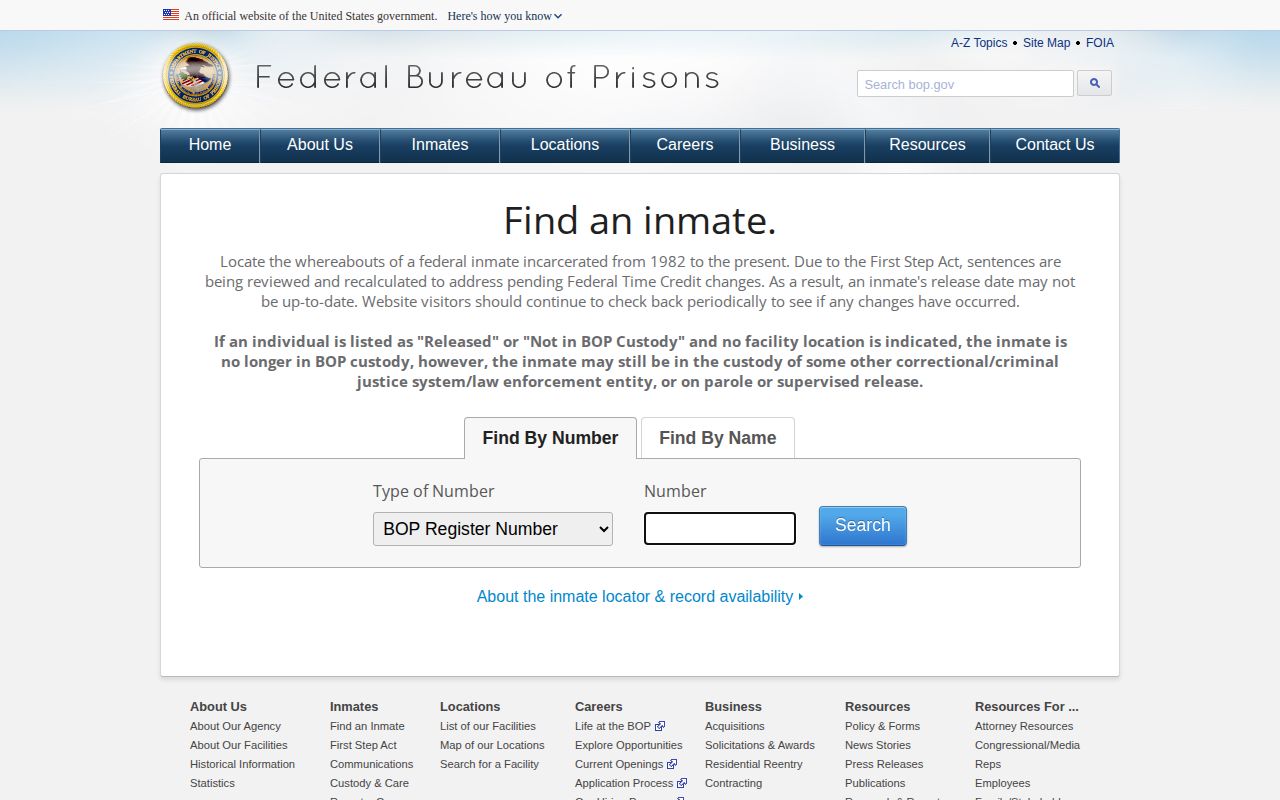
The BOP locator is the federal counterpart to GDC search and should not be used for an ordinary Miller County Jail record.
For current ICE custody, search by A-number or by name, country of birth, and birth date through the ICE locator. If no result appears, USAGov advises contacting an Enforcement and Removal Operations field office. A transfer to ICE or federal custody is not a community release.
Where Miller County Records Appear
The same person can have several records because each agency documents its own part of the case.
| Status or event | Where to look | What it confirms |
|---|---|---|
| Current local custody | Miller County Jail phone check | Whether the person is held now |
| Past local custody | Sheriff release record | When and why the local hold ended |
| Bond or court release | Magistrate or Superior Court | Order, disposition, sentence, or case status |
| State prison custody or release | GDC and State Board tools | State status, sentence dates, parole, or discharge |
| Community supervision | Board parole search and Donalsonville DCS | Parole or felony probation status |
| Federal custody or release | BOP locator | Federal custody status and release entry |
Miller County Jail Release Route
Miller County Jail is the only detention facility in the official Facility Map. The Sheriff's Office operates it at 300 W. Pine Street in Colquitt. It holds people awaiting court, some sentenced people awaiting transfer to state or federal custody, and people serving certain misdemeanor sentences of one year or less.
That mixed role makes the phrase “released from Miller County Jail” ambiguous. Ask whether the person went to the community or to another custodian. Donalsonville DCS is a post-release supervision office and is not a detention facility.
When a phone check confirms that local custody ended, record the date, time, release reason, and destination given by the jail. Then match the next inquiry to that outcome. A bond event points toward Magistrate Court. A felony disposition or sentence order belongs with the Clerk of Superior Court. A transfer to GDC requires the state offender search, while federal or immigration custody requires the appropriate federal locator. If the answer remains unclear, a written request to the Sheriff's Office creates a more durable trail than relying on an absent name in a live-custody system.
The county's small online footprint makes precise routing especially important. The official sheriff page provides contact details but no public roster, released tab, or daily download. The general county open-records form also warns that sheriff records must go directly to that constitutional office. Those two facts explain why an accurate Miller County search begins with the jail and follows the documented custodian instead of treating a broad web search as the record itself.